The Shadow of Victory
As of 2023, less than 1% of the 16 million Americans who served in World War II are still alive. Their sacrifices, often made at a young age, secured the freedoms we enjoy today. Remembering their experiences and the lessons learned from that global conflict is crucial to safeguarding democracy against future threats.
The following is a fictional story developed to encourage critical thinking and reflection on contemporary issues.
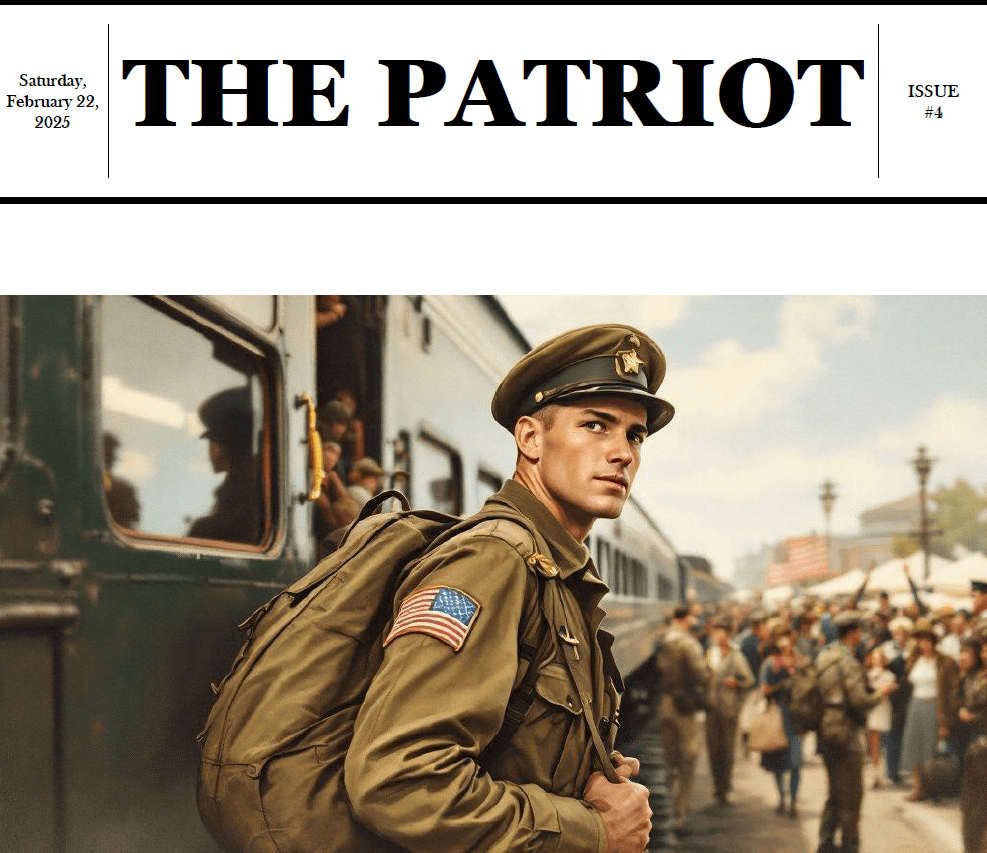
The train rattled to a halt in rural Pennsylvania, a puff of steam hissing into the crisp autumn air. Sergeant Jack Rourke stepped onto the platform, duffel bag slung over his shoulder, the war finally, blessedly, behind him. He’d seen enough death and destruction in Europe to last a lifetime. He’d fought his way through hedgerows, witnessed the horrors of concentration camps, and lost good buddies in the brutal push toward Berlin. He just wanted to go home, pick up the pieces, maybe start a family.
But the homecoming wasn’t the idyllic picture he’d painted in his mind during those long, lonely nights in a foxhole. Something felt…off. The newsreels, once filled with images of Rosie the Riveter and patriotic fervor, now seemed to gloss over troubling undercurrents. Whispers of communist infiltration in the government, labor unrest, and a growing sense of unease filled the air. It was subtle, insidious, like a creeping vine choking the life out of something good.
Jack had seen this before. He’d seen the carefully crafted propaganda, the manipulation of fear, the erosion of freedoms in Nazi Germany. He’d seen how easily a population could be swayed, how quickly a nation could descend into tyranny. And now, he recognized the same patterns, albeit in a different guise, emerging in the very country he’d risked his life to defend.
One evening, at a local diner, he overheard a conversation that chilled him to the bone. Two men, well-dressed and influential, spoke in hushed tones about “re-education” programs and the need for “national unity,” echoing the same language he’d heard from the defeated enemy. His gut clenched. He knew he couldn’t ignore it. He had a responsibility, not just to himself, but to every man who’d fallen beside him.
Then, the newsreel footage flickered, grainy images of men and women, their faces etched with fear, being herded onto buses. A chilling voiceover spoke of “national security” and the need to “isolate potential threats.” Jack’s blood ran cold. This wasn’t the fight for freedom he’d envisioned. This was a betrayal, a perversion of everything he’d fought for. He saw the posters appear, stark and ominous, with the faces of those deemed “undesirable” plastered across them. The government-sponsored newspapers churned out stories of sabotage, of foreign plots, of the insidious influence of “alien ideologies.” Fear, like a venomous gas, seeped into every corner of society. The reality of what was happening, the targeted deportations, settled upon him like a suffocating blanket.
He saw it in the eyes of his neighbors, too. Some, genuinely afraid, clutched at the propaganda like a lifeline, desperate for a simple explanation for their anxieties.
Others, seeing an opportunity for advancement, readily embraced the new order, eager to climb the social ladder by denouncing their rivals. Still others, weary of conflict and uncertainty, simply wanted peace and quiet, willing to trade a little freedom for a sense of stability, even if it was a false one. He understood, with a sinking heart, that fear, ambition, and exhaustion could be just as effective weapons as any tank or bomber. He even recognized a flicker of that weariness in himself, the tempting whisper to just keep his head down and survive. But the faces of his fallen comrades, the memory of the camps, spurred him on.
He knew he wasn’t alone. He began connecting these disparate individuals, building a network of concerned citizens determined to protect the freedoms they’d fought so hard to win. They organized town hall meetings, wrote letters to the editor, and started a small, independent newspaper to counter the propaganda machine. They faced opposition at every turn – hecklers at their meetings, threats against the newspaper, and whispers labeling them as troublemakers and radicals. But they persisted.
The fight was long and arduous. They were labeled as radicals, troublemakers, even communists themselves – the irony wasn’t lost on Jack. But they persevered, fueled by a deep-seated belief in the principles upon which their nation was founded. He realized that this fight, this battle for the soul of America, was the most important one he’d ever faced.
The message of Jack’s story, however fictional, resonates powerfully today. It’s a reminder that vigilance is the price of freedom. It’s a call to action against complacency, against the seductive allure of easy answers and the silencing of dissent. It highlights the importance of critical thinking, of questioning authority, and of recognizing the subtle ways in which our freedoms can be eroded. It reminds us that patriotism isn’t blind allegiance; it’s a commitment to the ideals of liberty and justice for all, even when it means challenging the status quo. It’s about recognizing that the enemy isn’t always a foreign power; sometimes, it can be a homegrown ideology that seeks to undermine the very foundations of our democracy. And it’s a message that is as relevant now as it was then: freedom isn’t won once and for all; it must be defended, generation after generation.

Discover more from The Patriot
Subscribe to get the latest posts sent to your email.
